
Bathroom tiles don’t usually become dirty overnight. Most stains build up gradually from soap scum, hard water, mould, body oils and everyday moisture. The trick isn’t scrubbing harder it’s using the right cleaning method for the type of stain you’re dealing with.
If you’ve tried cleaning your tiles before but they still look dull, cloudy or stained, you’re probably using the wrong product for the job.
This guide will help you identify the problem first, then show you the safest and most effective way to clean your bathroom tiles without damaging the finish.
Is This Your Problem?
Before reaching for a cleaner, take a quick look at your tiles. Different stains need different treatments, and using the wrong one can waste time or even damage the surface.
| If your bathroom tiles have… | Most likely cause | Go to |
|---|---|---|
| White chalky marks | Hard water limescale | Remove limescale |
| Black spots on grout or silicone | Mould growth | Remove black mould |
| Pink or orange slime | Bacteria caused by moisture | Remove pink bathroom stains |
| Sticky or cloudy film | Soap scum and shampoo residue | Remove soap scum |
| Greasy or dull floor tiles | Dirt, body oils and cleaning residue | Clean floor tiles |
| Grout turning grey or black | Embedded dirt or mould | Deep clean grout |
Important Note: If you’re not sure what the stain is, start with warm water and a mild cleaner first. Strong chemicals should only be used when they’re genuinely needed.
Choose the Right Cleaner for Your Tile Type
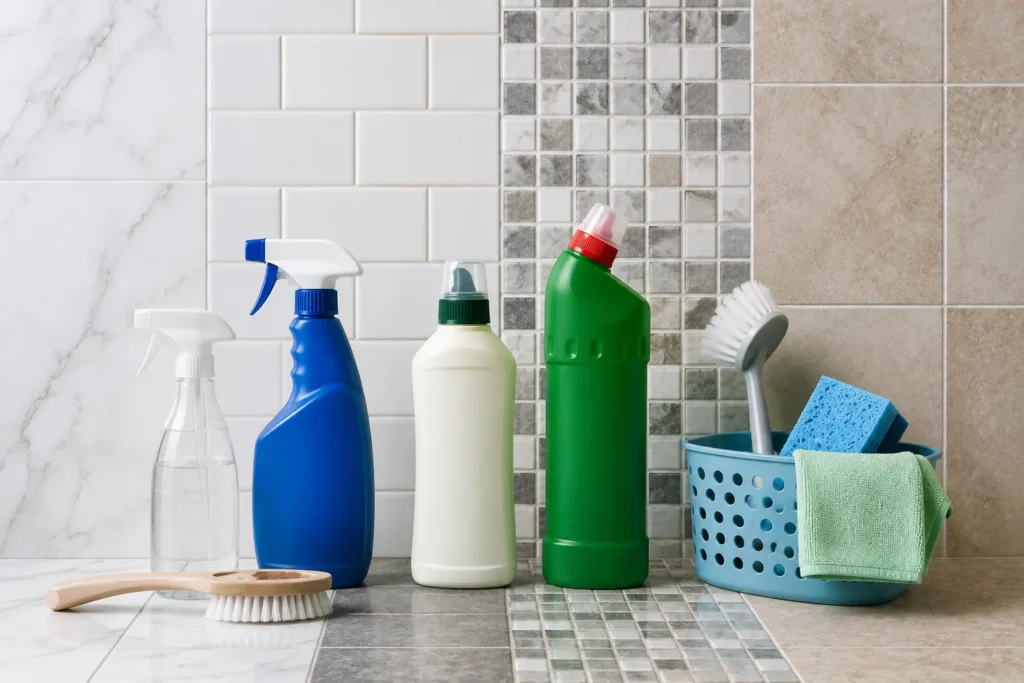
Not all bathroom tiles are made from the same material. A cleaner that’s perfectly safe on ceramic tiles could permanently damage natural stone.
Before you start, check what type of tile you have.
Ceramic Tiles
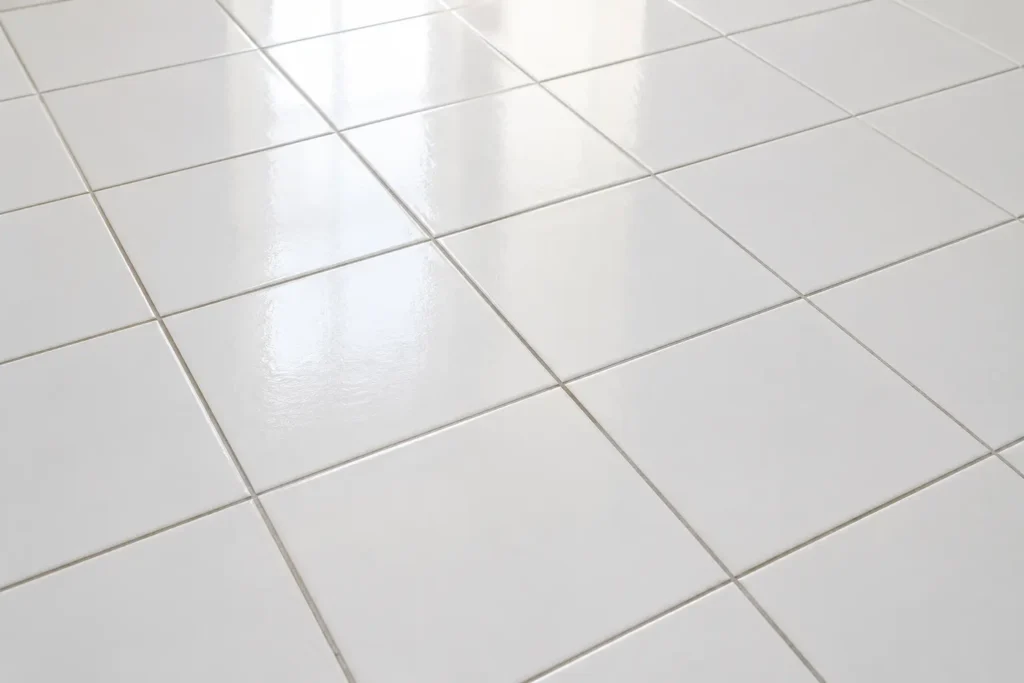
- Ceramic tiles are found in most UK bathrooms and are the easiest to maintain.
- You can safely clean them with warm water, washing-up liquid, baking soda or a bathroom tile cleaner. White vinegar also works well for removing limescale from ceramic tiles.
- Avoid using metal scourers, as they can leave fine scratches on glossy finishes.
Porcelain Tiles
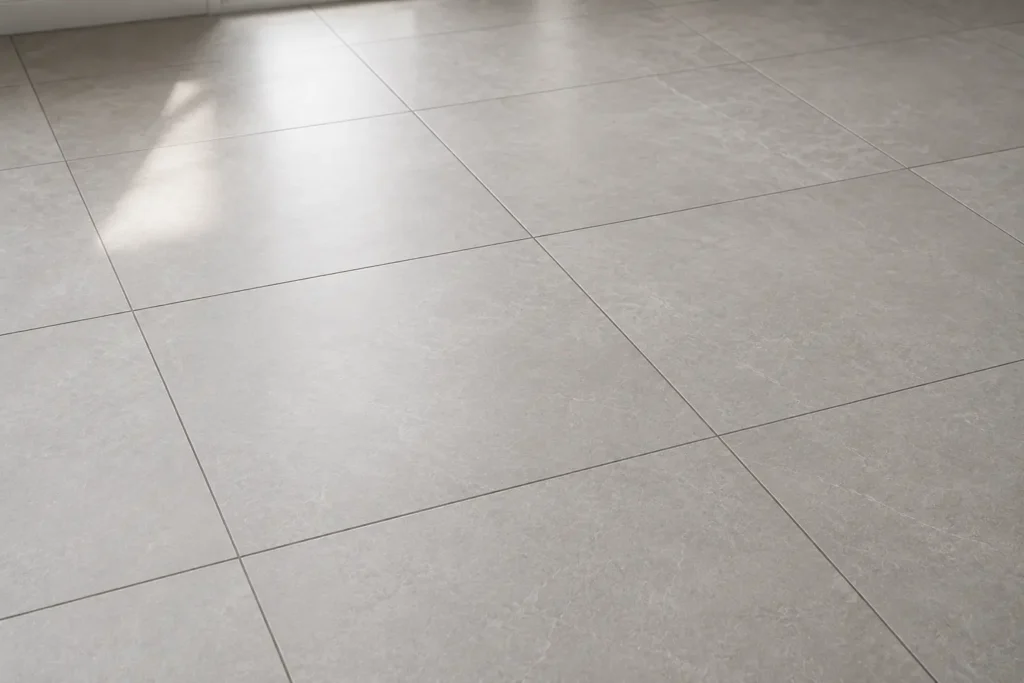
- Porcelain tiles are denser than ceramic and resist staining well.
- A pH-neutral cleaner or warm soapy water is usually all that’s needed. For stubborn marks, use a soft brush rather than anything abrasive.
- Although porcelain is hard-wearing, excessive scrubbing can still dull polished surfaces over time.
Marble Tiles
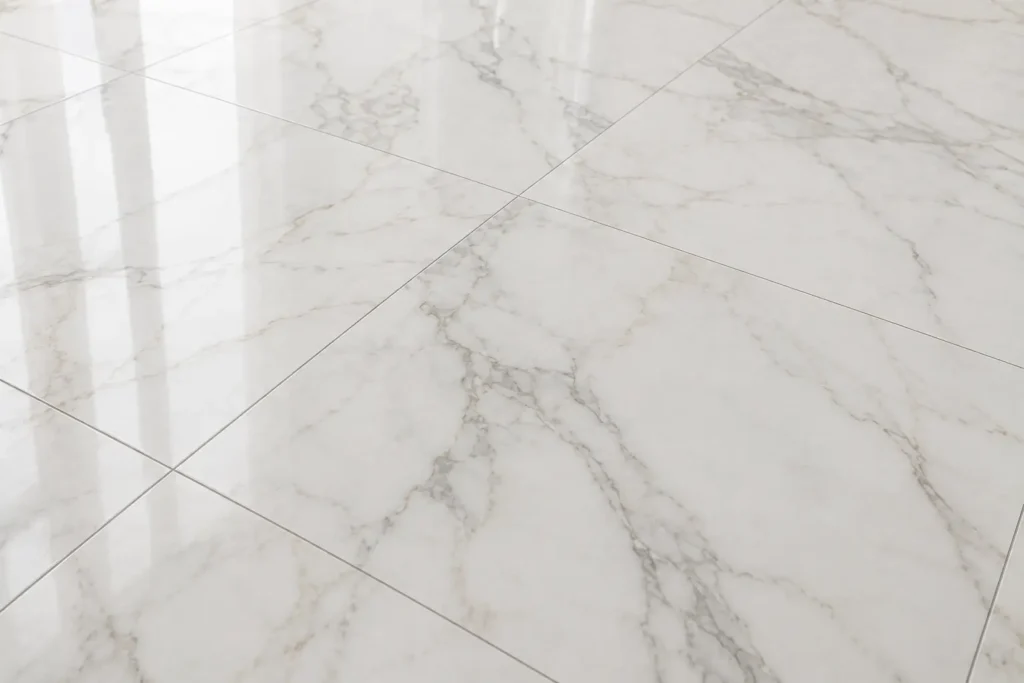
- Marble needs much more care than ceramic or porcelain.
- Never use vinegar, lemon juice, bleach or acidic cleaners on marble. They can permanently etch the surface and leave dull patches that cannot simply be cleaned away.
- Instead, use a pH-neutral stone cleaner and a soft microfibre cloth.
Natural Stone Tiles
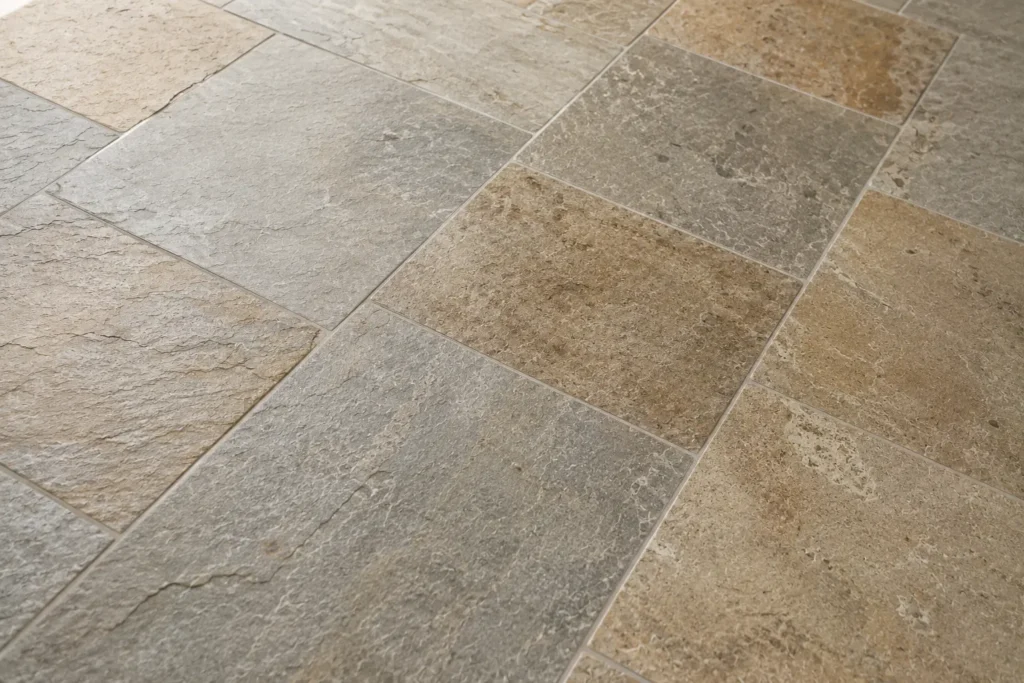
- Slate, travertine and limestone should always be cleaned with products designed specifically for natural stone.
- Acid-based cleaners may remove the stain but can also damage the protective finish, making the tiles more likely to stain again in the future.
- If you’re unsure what material your tiles are made from, treat them as natural stone until you’ve confirmed otherwise.
What You’ll Need For This
Most bathroom tile cleaning jobs don’t require expensive products.
Gather these before you begin:
- Warm water
- Bucket
- Washing-up liquid
- Baking soda
- White vinegar (ceramic and porcelain tiles only)
- Microfibre cloths
- Soft sponge
- Soft-bristled brush or old toothbrush
- Rubber gloves
- Spray bottle (optional)
For heavy mould or severe staining, you may also need a specialist mould remover.
Before You Start The Process
Spending two minutes preparing the room will make cleaning easier and help prevent damage.
- Open a window or switch on the extractor fan.
- Remove shampoo bottles, soap dishes and other bathroom items.
- Sweep or vacuum the floor to remove loose dirt.
- Test any cleaner on a small hidden area first.
- Wear gloves if you’re using mould removers or stronger cleaning products.
- Never mix bleach with vinegar or other household cleaners.
If your bathroom has poor ventilation, keep the fan running while you work. This helps the room dry faster and reduces the chance of mould returning.
The Quickest Way to Clean Bathroom Tiles
If your tiles only have light everyday dirt, you don’t need harsh chemicals.
- Mix a few drops of washing-up liquid into a bucket of warm water. Wipe the tiles with a soft sponge, then rinse with clean water and dry them with a microfibre cloth.
- For many bathrooms, this simple routine is enough to keep tiles looking clean and shiny.
- If stains remain after this first clean, identify the type of stain before moving on to a stronger cleaning method. Using the correct solution from the start is far more effective than repeatedly scrubbing the surface.
What Should You Not Clean Tile With?
Avoid steel wool, wire brushes and abrasive cleaners, as they can scratch the surface. Don’t use vinegar or acidic cleaners on marble or natural stone, and never mix bleach with other cleaning products.
What Is the Best Way to Clean Bathroom Tiles?
Clean tiles with warm water, washing-up liquid and a soft microfibre cloth. For tougher stains, use a cleaner that’s suitable for your tile type, then rinse and dry the surface.
How Do Professionals Clean Ceramic Tile?
Professionals remove loose dirt first, apply a suitable tile cleaner, scrub the grout with a soft brush, then rinse and dry the tiles for a streak-free finish.
What Are Common Tile Cleaning Mistakes?
Using abrasive tools, choosing the wrong cleaner, skipping the rinse and leaving tiles wet are common mistakes. Drying the tiles after cleaning helps prevent water marks and mould.