
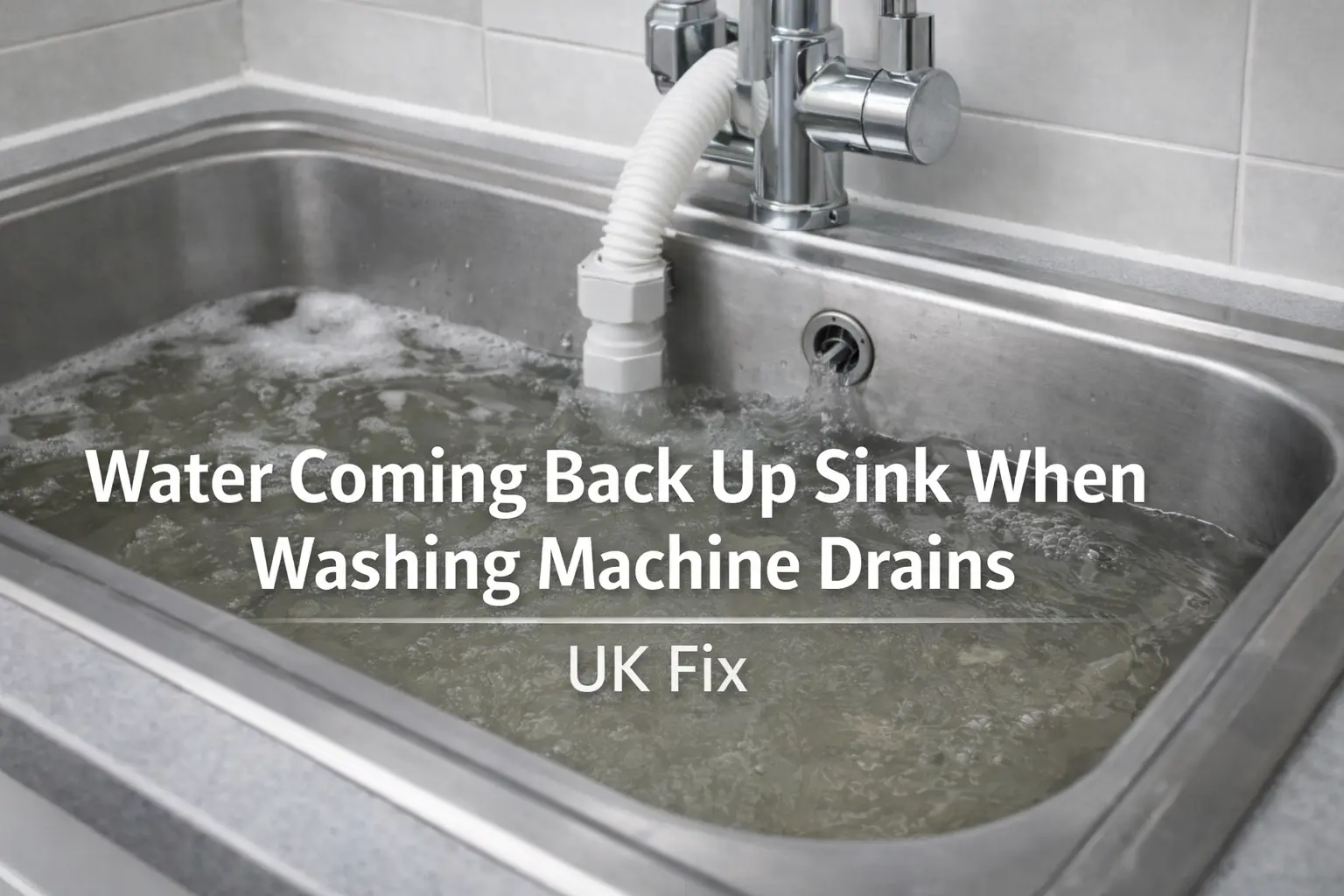
I know this is stressful — the sink backing up when the washing machine empties usually means the waste pipe can’t cope.
Water rises in the kitchen sink exactly when the washing machine starts draining.
Is this your problem?
What to do
- Stop the wash cycle if water is close to overflowing.
- Check the sink trap under the basin. Place a bowl, unscrew it, clear lint/grease, refit tightly.
- Run the tap briefly. If it drains slowly, there’s still a blockage.
- Use a plunger on the sink (block the overflow with a wet cloth).
- If water still backs up, move to the next section.
Safe DIY so far.
Check Uk common Problem blocked bathroom sink problem
The sink drains fine normally, but backs up only during fast spin or drain cycles.
Is this your problem?
A Related Problem is
What to do
- The washing machine discharges water very quickly.
- Check if the washing machine hose is pushed too far down the standpipe.
- Pull it up so it sits 10–15 cm into the pipe, not sealed tight.
- Make sure there’s an air gap — UK plumbing relies on this to prevent backflow.
Safe DIY.
Gurgling noises from the sink or washing machine drain, then water comes back up.
Is this your problem?
What to do
- This points to a partial blockage further along the waste pipe.
- Pour a full kettle of hot (not boiling) water into the sink to loosen grease.
- Follow with a sink plunger for 20–30 seconds.
- Avoid chemical drain cleaners — they often don’t work on lint and can damage pipes.
DIY is fine. Stop if pipes leak.
This happens in winter or after heavy rain.
Is this your problem?
What to do
- External waste pipes may be restricted or frozen.
- Check the outside gully (usually near the kitchen wall).
- If it’s full or slow draining, flush with a bucket of warm water.
- Clear visible debris only — don’t force tools down the drain.
DIY only if easily accessible.
Multiple fixtures back up — sink, washing machine, maybe the dishwasher too.
Is this your problem?
What to do
- This suggests a main waste or shared drain blockage.
- Do not keep running the washing machine.
- At this point, plunging won’t fix it.
Stop here and call a professional drain engineer.
Is it safe to fix this yourself in the UK?
What is safe DIY
- Removing and cleaning the sink trap under the basin.
- Using a sink plunger (with the overflow blocked).
- Adjusting the washing machine drain hose height and air gap.
- Flushing the outside gully with warm water if it’s easy to reach.
- Clearing visible lint or grease from accessible waste fittings.
These are low-risk and commonly done by UK home owner
What is NOT safe
- Pouring strong chemical drain cleaners into the system.
- Forcing rods or metal tools down indoor waste pipes.
- Removing sealed pipe joints or cutting pipework.
- Accessing shared drains in flats or communal buildings.
- Lifting manhole covers on the public sewer.
These can cause leaks, pipe damage, or legal issues.
When to stop
- Water starts leaking from pipe joints or cupboards.
- The sink backs up faster after plunging.
- Bad sewage smells appear.
- More than one fixture starts backing up.
- You’re unsure which pipe serves the washing machine.
Stopping early prevents flooding and pipe failure.
When to call a plumber
- The outside gully is overflowing or won’t clear.
- Blockages keep returning after basic cleaning.
- You live in a flat with shared drainage.
- Waste water looks dirty or smells strongly of sewage.
- The washing machine drain causes backflow every cycle.
A plumber can clear the main waste safely using proper equipment.
How Much Does It Cost to Fix This Problem in the UK?
In most UK homes, fixing water backing up into the sink when the washing machine drains costs £50–£150 for a simple blockage. If the drain needs jetting or deeper cleaning, it can rise to £150–£250. Emergency or out-of-hours call-outs usually cost more.