
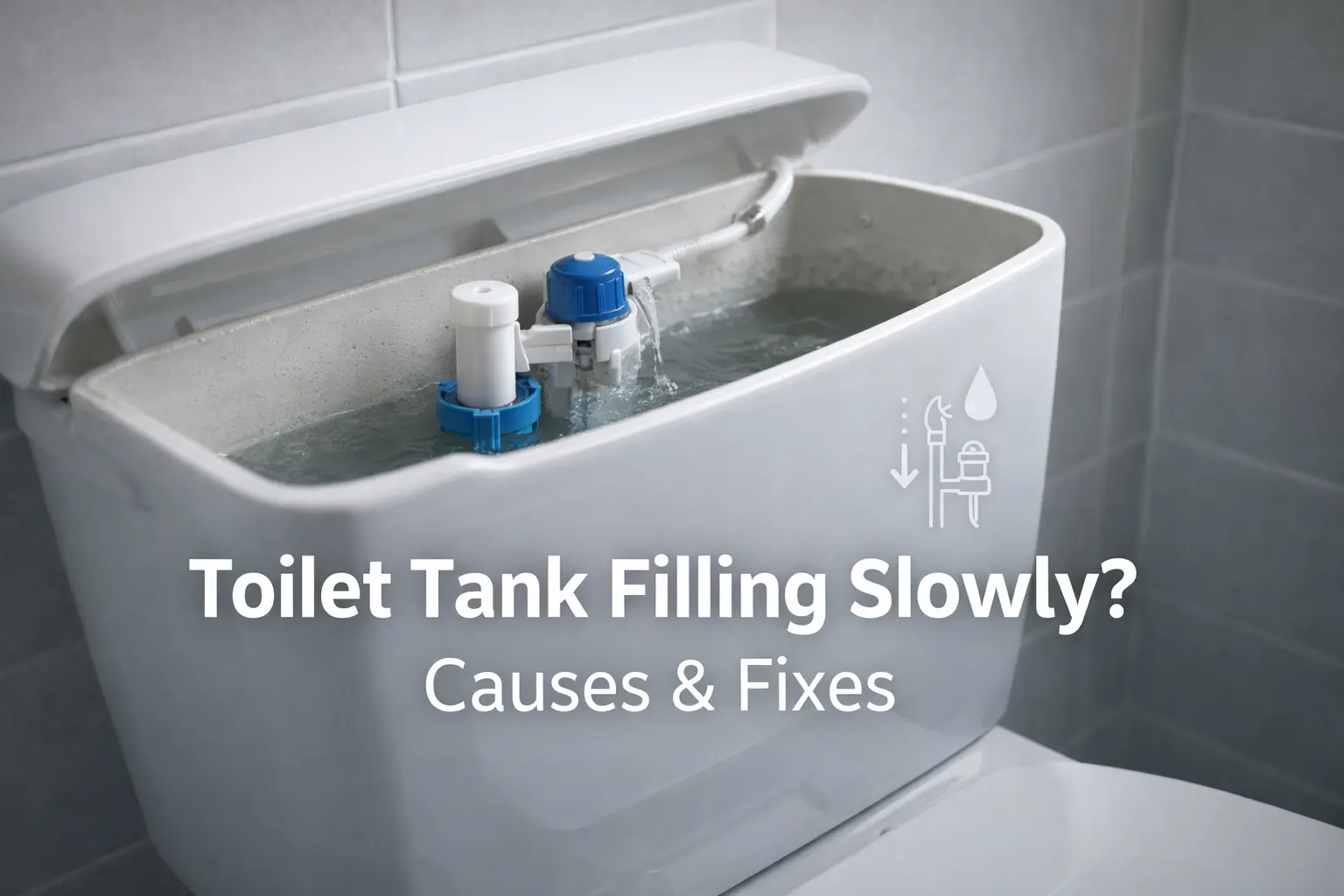
Your toilet tank is taking far too long to refill, and it’s becoming a daily annoyance.
1. The tank is barely filling, just a slow trickle
Is this your problem?
What to do
- If the valve still struggles, the diaphragm washer inside the fill valve is probably perished. This part is cheap, but replacing it requires removing the entire valve. If you’re not confident, this is the point to call a plumber.
- Lift the cistern lid and listen. If you only hear a faint hiss, the fill valve is likely clogged with limescale (very common in the UK, especially in hard-water areas).
- Turn off the isolation valve, a small screw-type valve on the pipe feeding the toilet. Turn it a quarter turn clockwise.
- Disconnect the fill valve hose and check for debris in the filter. Rinse under a tap.
- Turn the water back on and see if the flow improves.
2. The tank fills but stops halfway, then slowly creeps up
Is this your problem?
What to do
- This usually means the float arm or float cup is sticking.
- Check if the float is rubbing against the side of the cistern or catching on the overflow pipe.
- Gently move it up and down by hand. If it feels stiff, clean around the mechanism.
- Make sure the water level screw (on top of the fill valve) hasn’t been turned too far down. Adjust it a little anticlockwise to increase the refill level.
- If the float still sticks, the whole fill valve may be warped, common in older UK toilets. Replacement is the fix.
3. Water is constantly trickling into the bowl, slowing the refill
Is this your problem?
What to do
- Lift the lid and look for ripples in the toilet bowl. If water is running constantly, the fill valve can’t refill properly.
- Press the flush valve (or push the flush button) up and down. Sometimes the flush seal doesn’t fully sit back.
- Check the rubber seal at the base of the flush valve. If it’s worn or coated in limescale, the tank won’t hold water.
- Clean the seal and seating area.
- If the trickle continues, the seal needs replacing. This is a simple DIY job if the valve lifts out easily. If yours is a bottom-fixed valve, you may need a plumber.
4. The isolation valve is half-blocked (very common in older UK homes)
Is this your problem?
What to do
- Feel the pipe feeding the cistern. If it vibrates or makes a faint buzzing when filling, the isolation valve may be partially blocked with limescale.
- Turn the valve fully off, then fully on again. This sometimes dislodges debris.
- If the screw head is rounded or stuck, don’t force it — these valves snap easily.
- A plumber can replace it quickly, and it’s not expensive.
5. The tank fills slowly only when other taps are running
Is this your problem?
What to do
- This usually happens in homes with low mains pressure, common in UK terraces and older flats.
- Test it: run the kitchen tap and watch the toilet refill. If it slows down massively, pressure is the issue.
- Not much DIY can fix this. You can try refilling when other water isn’t in use, but if the pressure drop is severe, a plumber may need to investigate your stop tap or incoming supply.
6. The fill valve is the old-style ballcock (metal arm)
Is this your problem?
What to do
- These older valves are known for slow filling.
- Check the small nozzle where the water enters the tank. If it’s crusted with white limescale, clean it gently.
- Make sure the float hasn’t taken on water (shake it if you hear water inside, it’s failed and must be replaced).
- Upgrading to a modern float-cup fill valve is the long-term fix.
Is it safe to DIY?
You can safely:
- Clean limescale
- Adjust floats
- Rinse filters
- Reset isolation valves
- Replace simple seals
- When toilet keep running after flush sometime its safe for DIY and sometime you should call Plumber.
Stop and call a professional if:
- Water won’t shut off at the isolation valve
- You need to remove the toilet cistern
- Pipework looks corroded or seized
- The fill valve replacement feels beyond your comfort level