
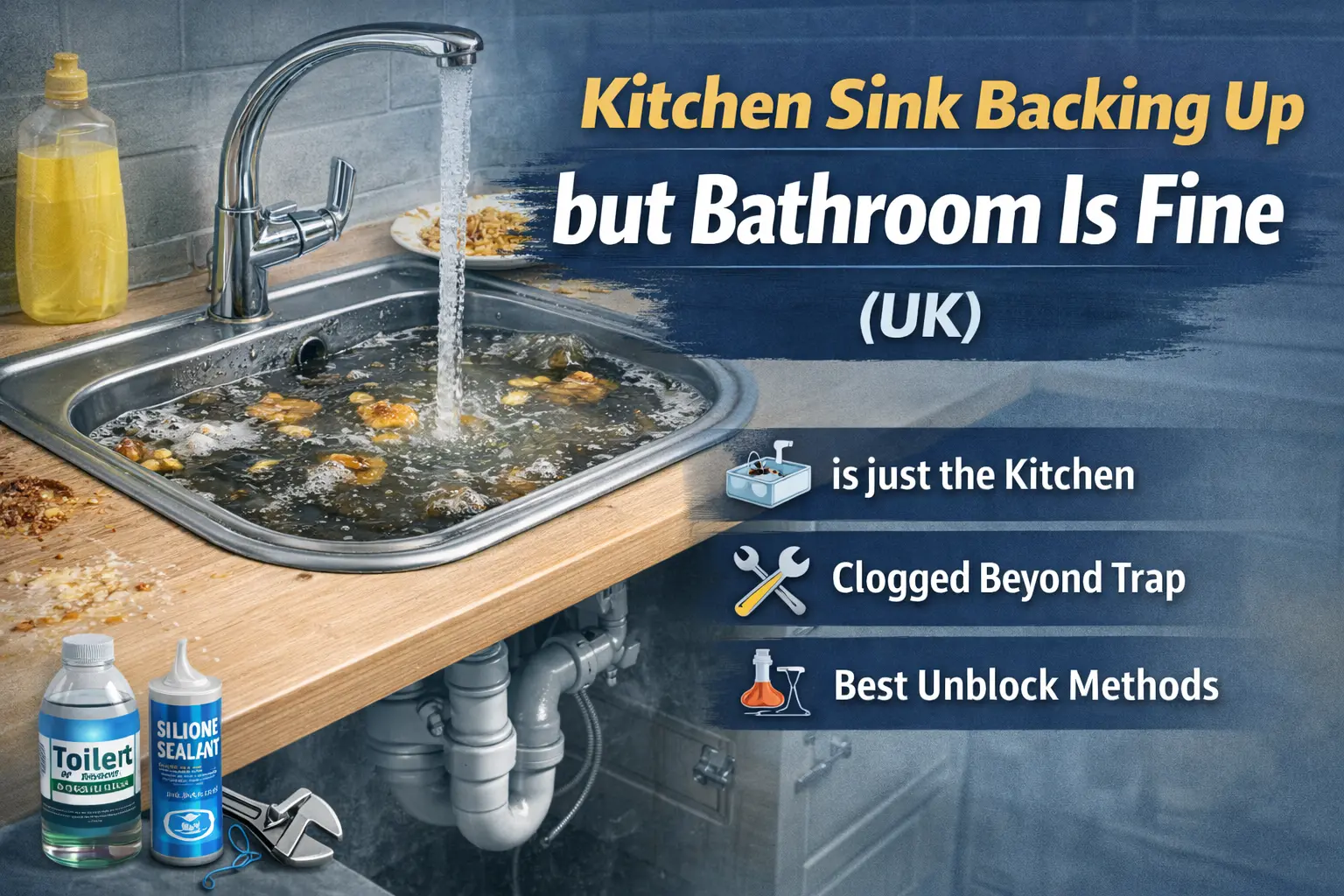
Your kitchen sink is backing up, but the bathroom drains are fine — that’s a very common UK plumbing problem and it’s usually local to the kitchen line.
Water rises in the kitchen sink when you run the tap or washing machine.
Bathroom sink, bath, and toilet all drain normally.
If it’s the other way round — where the bathroom sink won’t drain but the kitchen is fine, that’s usually a separate issue with the bathroom waste line.
Is this your problem?
What to do
- Stop running water immediately. Don’t keep “testing” it.
- Check under the sink for leaks — pressure can force joints apart.
- Put a bowl under the trap and remove the U-bend.
- Clear grease, food, or sludge by hand. This is very common in UK kitchens.
- Rinse the trap with hot (not boiling) water and refit tightly.
- Test slowly with cold water first.
Safe DIY.
Stop if pipes are brittle, glued, or won’t reseal.
The sink drains slowly, then backs up only when the washing machine empties.
Is this your problem?
What to do
- Locate the washing machine standpipe or spigot under the sink.
- Disconnect it and check for lint, grease, or soap build-up.
- Clean the spigot fully — a bottle brush works well.
- Reconnect and secure with a hose clip.
- Run a short rinse cycle to test.
Safe DIY.
If water backs up immediately again, stop.
You’ve cleared the trap, but water still backs up after a few seconds.
Is this your problem?
What to do
- The blockage is likely further along the kitchen branch pipe.
- Use a proper plunger — block the overflow with a damp cloth first.
- Plunge firmly for 20–30 seconds.
- If no change, use a hand drain auger (not chemicals).
- Feed slowly — don’t force it.
DIY is OK if you’re confident.
Stop if the auger won’t pass a bend.
The sink backs up and you hear gurgling or air bubbling.
Is this your problem?
What to do
- This points to partial blockage plus poor airflow.
- Check the external kitchen waste pipe for grease or debris.
- If it connects to a gully, lift the cover and check flow.
- Flush with a bucket of warm water to confirm movement.
Safe to inspect.
Do not dismantle shared drains.
The problem keeps coming back every few weeks.
Is this your problem?
What to do
- You likely have a grease build-up in the kitchen line.
- Avoid pouring fats, oils, or food slurry down the sink.
- Weekly: flush with hot tap water after washing up.
- Fit a simple sink strainer if you don’t already have one.
If it still returns, it’s time to stop DIY.
When to stop and call a plumber (UK)
- Water backs up into other sinks or outside gully.
- You smell sewage, not just stale water.
- Pipes are glued, cracked, or shared with neighbours.
- You’re in a flat with communal drainage.
That usually means a deeper blockage needing rodding or jetting — not something you should tackle yourself.