
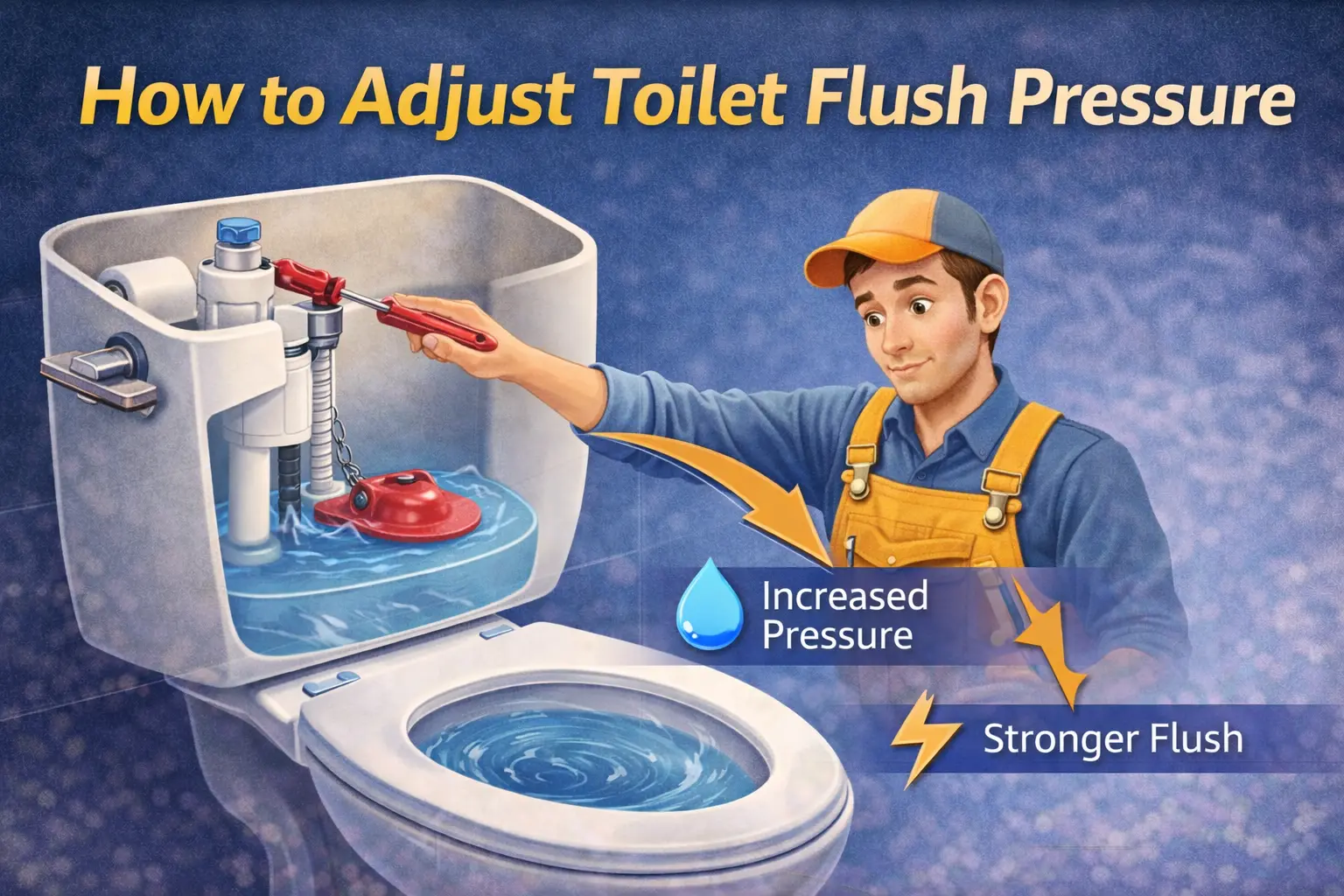
The flush is weak and doesn’t clear the bowl properly
Is this your problem?
What to do
First, lift the cistern lid carefully and place it somewhere safe.
Check the water level inside the cistern. In most UK toilets, the water should sit about 1 inch (2–3cm) below the overflow pipe.
If the level is low, the flush will be weak.
Look for the fill valve — usually on the left with a float attached.
- If it’s a float arm (older style), gently bend the metal arm slightly upward to raise the water level.
- If it’s a modern plastic float with an adjustment screw, turn the screw clockwise to raise the level.
If adjustments don’t help, this usually points to a deeper issue — see why a toilet flush is weak in UK homes.
Flush once and recheck.
Do not let water rise above the overflow pipe.
Safe DIY. No tools usually needed.
The flush is short or cuts off too quickly
Is this your problem?
What to do
You likely have a dual-flush system (two buttons on top).
Lift the lid. In the centre, you’ll see the flush valve tower.
Many UK dual-flush valves have an adjustable slider or dial that controls how much water is released.
Look for:
- A small clip that slides up or down
- Or a dial marked + / –
Move it slightly toward more water (+ or higher setting).
Refit the lid and test.
Do not force plastic parts — they snap easily in cold weather.
Safe DIY.
The handle feels loose and doesn’t trigger a strong flush
Is this your problem?
What to do
Inside the cistern, check the lift chain or connecting rod from the handle to the flush valve.
If there’s too much slack, the flapper doesn’t lift fully.
Shorten the chain slightly — leave a small amount of slack, but not loose.
Too tight is just as bad — it can cause constant running.
Tighten the handle nut inside the cistern if it feels wobbly.
Safe DIY with basic hand tools.
The toilet used to flush strongly but now feels weak
Is this your problem?
What to do
Check for limescale buildup.
In hard water areas (most of England), scale builds up inside the rim holes and siphon jet.
Pour a full kettle of warm (not boiling) water mixed with white vinegar into the bowl.
Let it sit overnight.
Use a small mirror and torch to inspect under the rim — poke blocked holes gently with a cocktail stick.
Do not use metal tools — you’ll damage the glaze.
Safe DIY.
Water pressure in the house is fine, but the cistern fills very slowly
Is this your problem?
What to do
Turn off the isolation valve behind or below the toilet.
Flush to empty the cistern.
Disconnect the flexible fill hose at the bottom (have a towel ready).
Check for debris in the small inlet filter inside the fill valve.
Rinse it under the tap.
Reconnect and reopen the valve slowly.
If the fill valve still trickles, it may need replacing.
Replacing a fill valve is manageable DIY if you’re confident.
If pipework looks corroded or seized — stop and call a plumber.
You’ve adjusted everything but it’s still weak
Is this your problem?
What to do
Older UK toilets sometimes use low-volume 4.5L systems.
If internal parts are worn (especially the flush valve seal), water leaks slowly into the bowl and reduces flush power.
Put a few drops of food colouring in the cistern and wait 15 minutes.
If colour appears in the bowl without flushing, the seal is leaking.
Replacing the flush valve or seal is possible DIY — but if it’s a concealed cistern (boxed in wall), get a plumber.
Do not dismantle a concealed unit unless you know the access panel layout.
When to stop and call a professional
- Cracked cistern
- Water leaking onto the floor
- Seized isolation valve
- Concealed toilet with no clear access
- Persistent low pressure across multiple taps
A weak flush is nearly always adjustment or limescale.
Take it step by step.
Don’t rush plastic parts.
And never force fittings in older UK plumbing.