
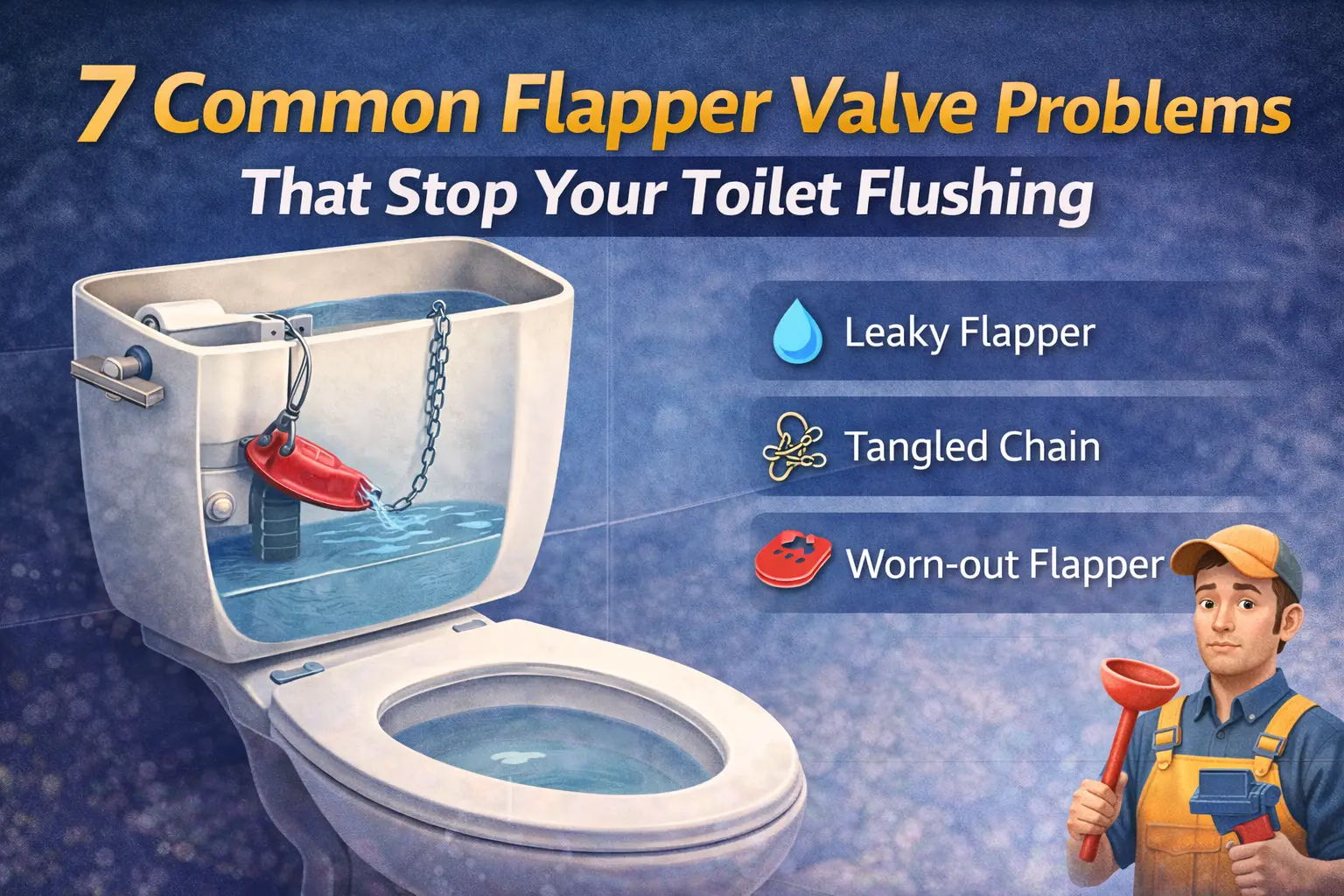
The handle moves, but the toilet barely flushes or not at all.
Is this your problem?
What to do
- Lift the cistern lid and flush while watching inside.
- Check if the rubber flapper lifts fully when you press the handle.
- If it barely lifts, shorten the chain by one link.
- Make sure there’s a little slack — not tight, not drooping.
- Flush again and watch.
Safe DIY: Yes.
Stop and call a professional: If the flush lever feels stiff or loose inside the handle mechanism.
Water runs constantly into the bowl after flushing.
Is this your problem?
What to do
- Turn off the isolation valve (small tap on the pipe under the cistern).
- Check the flapper seal — run your finger around the underside.
- If it feels slimy, warped, or cracked, it won’t seal.
- Clean the seat with a cloth and white vinegar.
- Refit and test.
Safe DIY: Yes.
Stop and call a professional: If water still runs after cleaning, the flapper needs replacing.
You have to hold the handle down for the toilet to flush.
Is this your problem?
What to do
- Look at the chain length again — it’s usually too long.
- Adjust so the flapper stays open for 2–3 seconds when flushed.
- Make sure the flapper isn’t catching on the overflow pipe.
- Flush and time it — it should close smoothly on its own.
Safe DIY: Yes.
Stop and call a professional: If the overflow pipe is loose or cracked.
The toilet flushes weakly, even though everything looks fine.
Is this your problem?
What to do
- Check the flapper size — UK cisterns vary more than people realise.
- If it’s too small or too stiff, it closes too fast.
- Replace with a like-for-like flapper (take the old one to Screwfix or B&Q).
- Reattach the chain and test.
Safe DIY: Yes.
Stop and call a professional: If the cistern is concealed or wall-hung
If this still doesn’t resolve the issue, this guide covers other UK-specific flushing problems and fixes:
Toilet Not Flushing Properly UK
The flapper looks fine, but keeps slipping or twisting.
Is this your problem?
What to do
- Check the mounting ears or clips on the flapper.
- If they’re stretched or loose, it won’t sit straight.
- Replacement is the only real fix — they don’t “tighten back up”.
- Fit the new one carefully and centre it over the flush valve.
Safe DIY: Yes.
Stop and call a professional: If the flush valve body itself is damaged.
When should you call a plumber in the UK?
Call a plumber if any one of these applies:
- The cistern is concealed (boxed in or inside the wall).
- Water keeps running after you’ve cleaned or replaced the flapper.
- The flush valve body is cracked or loose in the cistern base.
- The isolation valve won’t turn or starts leaking when touched.
- The toilet is wall-hung or part of a modern push-button system.
If you can’t see the full flush mechanism clearly, don’t force it.
UK cistern fittings crack easily and a small mistake can cause a slow leak that damages floors.
Typical plumber costs in the UK for this issue
These are realistic UK ranges, not worst-case quotes:
- Call-out + flapper replacement: £80–£150
- Flush valve replacement (parts + labour): £120–£220
- Concealed cistern repair: £150–£300+
- Emergency or weekend visit: add £30–£80
If the plumber is already there and the cistern is accessible, the job is usually under an hour.
Tip:
If it’s just a worn flapper and the cistern is visible, DIY usually saves you £100+.
If access is limited, paying once is cheaper than fixing water damage later.