
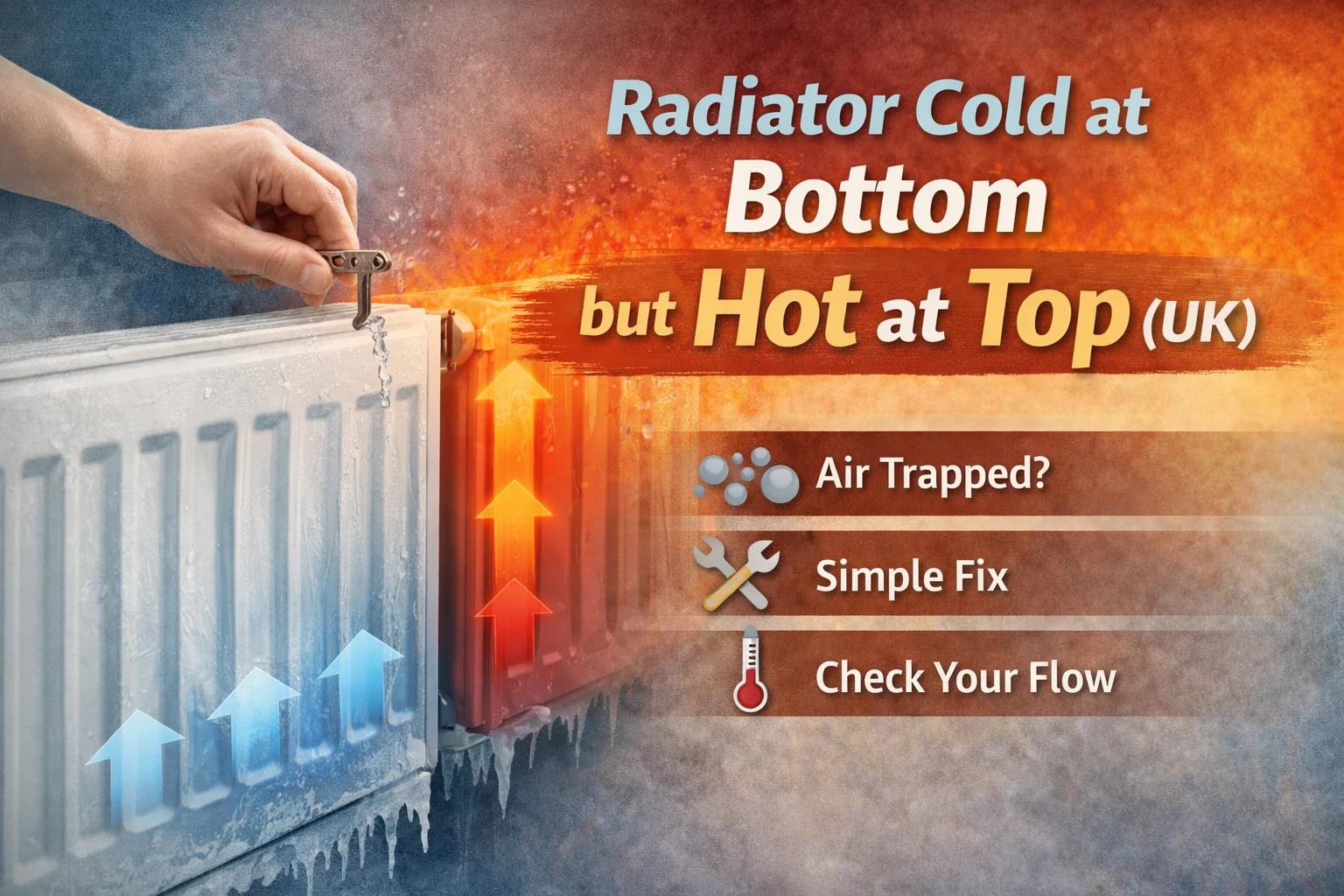
Your radiator is heating unevenly — hot at the top, cold at the bottom, and the room just won’t warm up properly.
Radiator hot at the top, stone cold along the bottom half.
Is this your problem?
What to do
- Check other radiators first.
If several are cold at the bottom, it points to system sludge, not a single fault. - Turn the heating off and let it cool fully.
This matters. Hot systems give false clues and can be unsafe. - Gently feel the pipes at the radiator valves.
If the flow pipe is hot but the return pipe stays cool, water isn’t circulating properly. - This is not an air issue.
Do not bleed the radiator. Air causes cold tops, not cold bottoms. - Book a power flush or chemical flush.
Sludge settles at the bottom of radiators and blocks flow. DIY flushing won’t clear it. - Ask for a magnetic filter if you don’t have one.
This stops sludge building up again after cleaning.
DIY or call a pro?
This is professional-only. Running the system like this strains the boiler and pump.
Only one radiator cold at the bottom; others seem fine.
Is this your problem?
What to do
- Turn heating off and allow full cooldown.
- Close both radiator valves.
Use a cloth and mark the valve position so you can reopen it correctly later. - Drain just that radiator.
Use a tray. Expect dark water if sludge is present. - Remove the radiator and flush it outside.
Use a garden hose until water runs clear from both ends. - Refit, reopen valves, and repressurise the system.
Check boiler pressure (usually 1.0–1.5 bar when cold). - Run heating and recheck heat spread.
- A similar problem is when only one radiator is not heating
DIY or call a pro?
DIY is fine only if you’re confident lifting, draining, and refilling safely.
Stop if valves leak or pipes won’t seal.
Radiator warms slightly at the bottom but never fully heats.
Is this your problem?
What to do
- Check the lockshield valve (the valve without numbers).
It may be nearly closed. - Open it a quarter turn at a time.
Wait 10 minutes between adjustments. - Balance against other radiators.
Some rooms steal most of the heat if not balanced.
DIY or call a pro?
Safe DIY. Go slowly. Never fully open everything at once.
Problem started after a boiler replacement or pipework work.
Is this your problem?
What to do
- Suspect disturbed sludge.
Old systems often release debris when work is done. - Check if a system flush was included.
Many installs skip it unless requested. - Call the installer back.
This is usually considered a commissioning issue.
DIY or call a pro?
Professional. Don’t keep running the boiler like this.
When to stop and call a professional immediately
- Radiator stays cold at the bottom after flushing
- Multiple radiators affected
- Boiler making grinding or kettling noises
- System pressure keeps dropping
- Water comes out black and gritty
If you want, tell me:
- Combi or system boiler
- Age of the heating system
- How many radiators are affected
What this repair normally costs in the UK
Single radiator sludge problem
- Radiator removal and flush: £80–£150
- Chemical cleaner added to system: £100–£180
Often sorted in one visit if valves cooperate.
Multiple radiators affected (system sludge)
- Full power flush (2–3 bed house): £350–£600
- Larger or older systems: £600–£800
This restores circulation and protects the boiler pump.
Balancing or valve adjustment
- Lockshield balancing or stuck valve fix: £60–£120
Usually charged as a standard call-out.
Magnetic filter (to stop it happening again)
- Supply and fit: £120–£200
Strongly recommended on older systems.
Typical UK plumber charges
- Call-out fee: £60–£90
- Hourly rate after first hour: £60–£80
Most single-radiator jobs stay within 1–2 hours.
When paying for a proper fix saves money
- More than one radiator cold at the bottom
- Boiler noises or overheating
- System older than 8–10 years
- No magnetic filter fitted
Leaving sludge untreated risks pump or boiler failure — far more expensive than fixing it now