
Is this your problem?
You hear a gurgling or glugging from the washing machine standpipe when the sink, bath, or toilet is used elsewhere.
What to do
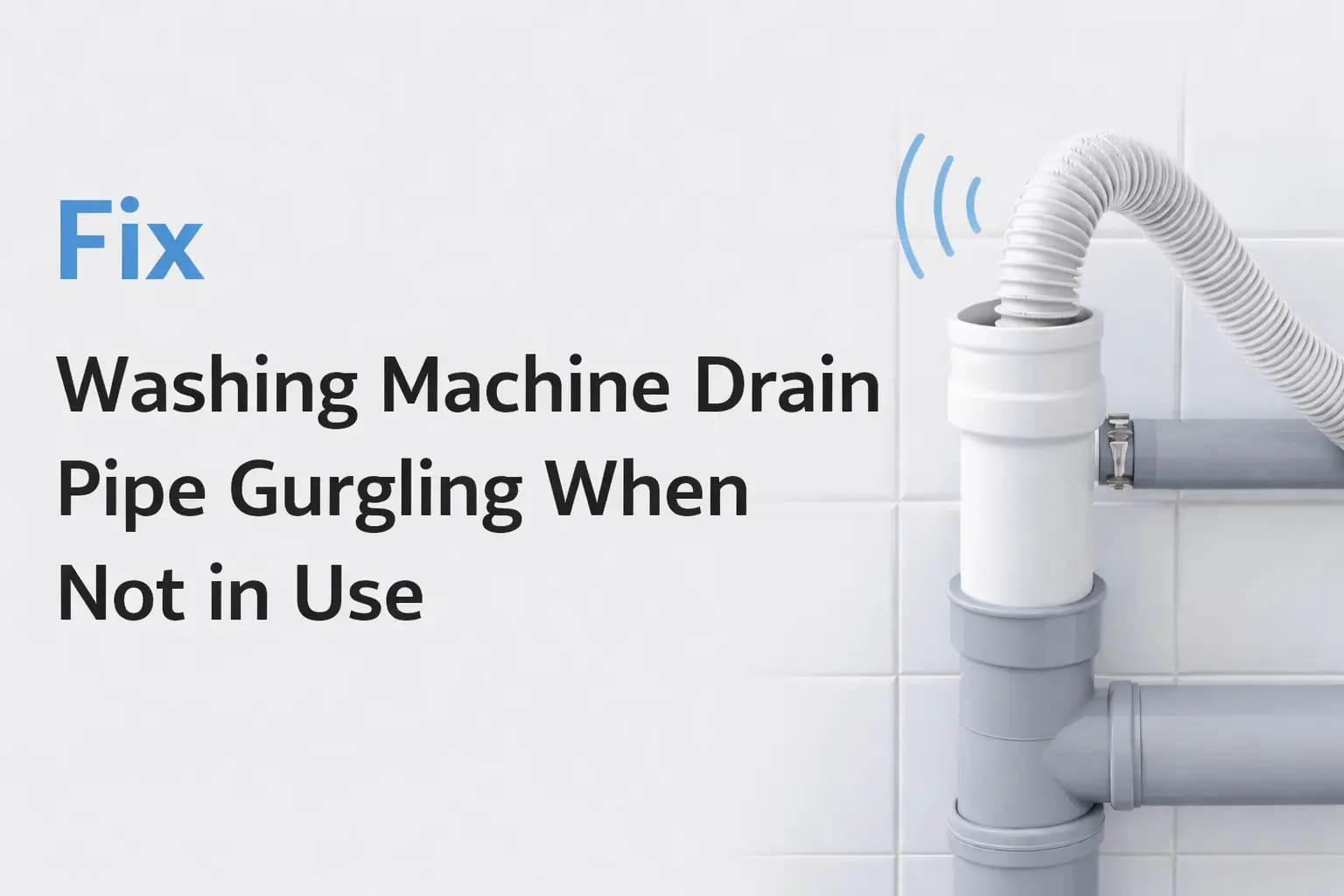
• Check the standpipe behind the machine isn’t sealed tight around the hose. It needs an air gap.
• Pull the hose up slightly so it sits 60–75 cm high, not pushed too deep.
• Run a full sink of hot water to see if the noise eases.
Safe DIY.
Stop and call a plumber if toilets also bubble , that points to a shared drain issue.
Is this your problem?
The noise happens at night or early morning when neighbours use water, but your machine is off.
What to do
• Common in flats with shared soil stacks. Air is being pulled through your trap.
• Pour a jug of water into the washing machine standpipe to top up the trap.
• Check the trap hasn’t dried out or been removed.
Safe DIY.
Call a pro if it keeps returning, the stack may need venting work.
Is this your problem?
Gurgling comes from the drain after rain, even when no taps are used.
What to do
• Go outside and check the gully the washing machine feeds into.
• Clear leaves, silt, or grease with gloves and a bucket.
• Flush with a hose to confirm free flow.
Safe DIY.
Stop if water rises, that’s a partial blockage further down.
Is this your problem?
A brief glug happens after the dishwasher finishes, but the washer is idle.
What to do
• Shared waste pipes can siphon each other.
• Make sure the washing machine trap is fitted and not leaking air.
• Refill the trap with water.
Safe DIY.
Call a plumber if traps are present but noise persists.
Is this your problem?
Constant gurgling, slow drains, or smells near the machine even when nothing is used.
What to do
• This suggests a developing blockage in the branch drain.
• Try a plunger on the standpipe opening with water in it.
• Do not use chemical drain cleaners, they often worsen UK pipe issues.
DIY only up to plunging.
Call a professional if there’s no improvement.
Is it safe to fix this yourself in the UK?
Yes, basic checks are safe for most UK homes if you stick to simple, visible fixes.
You can safely do this yourself:
• Adjust the washing machine drain hose height and position
• Make sure the standpipe is not sealed tight and has an air gap
• Pour water into the standpipe to refill a dry trap
• Clear leaves or sludge from the outside gully
• Use a plunger gently on the standpipe with water present
These actions don’t involve pipe removal, cutting, or sealed systems.
Stop and call a professional if:
• Other drains make noises when the washing machine is not in use
• More than one drain is slow at the same time
• Water rises in the outside gully
• Bad smells continue after basic checks
• You live in a flat with shared soil stacks